Who is B. Fernandes?
I was jostling along a sandy road in Turkana, Kenya with no cell signal, which is usually fine. Then my phone caught just enough signal to deliver one message from Bobby Moore before blinking back to “No Service.”
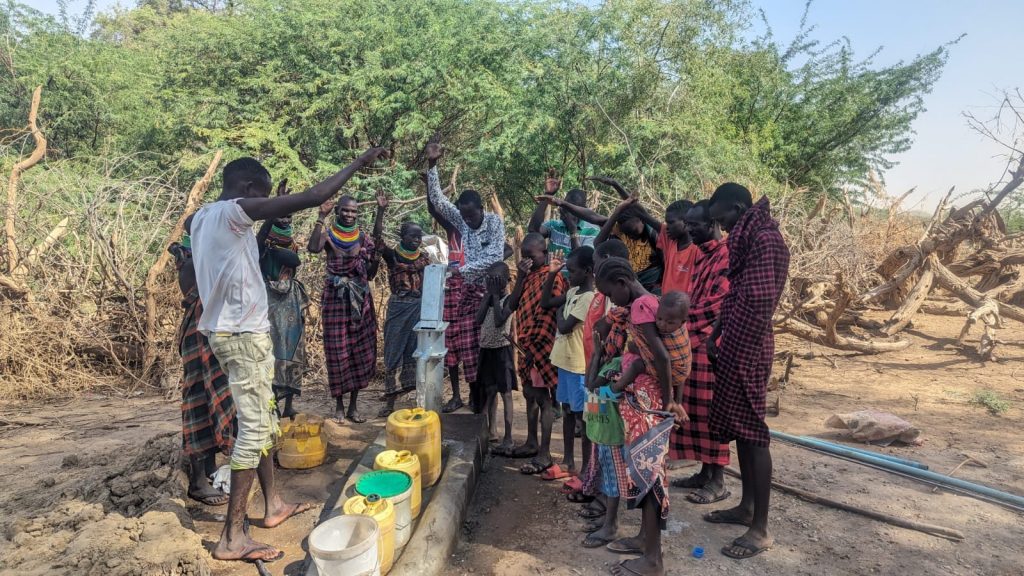
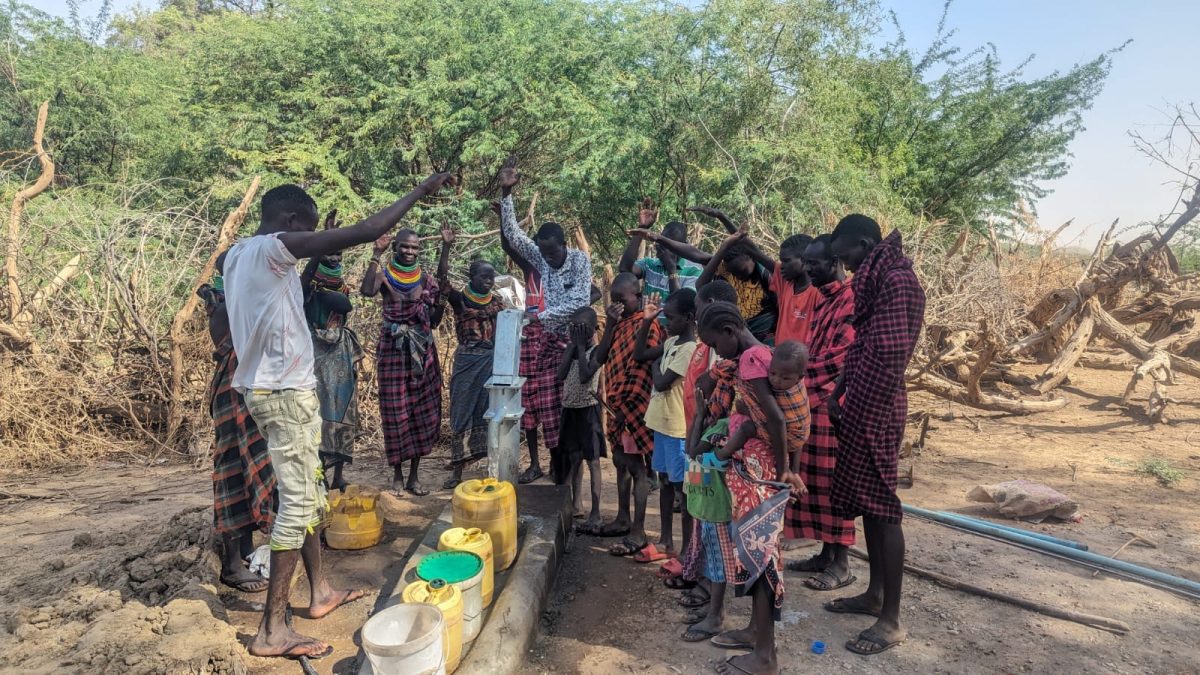
Bobby was a few hours away with a group of visitors who had traveled from the US for one reason: to stand at the well they had given. They’d prayed over this project. They’d given generously. And now, after a long wait, they were finally going to see it!
Except, according to Bobby’s message, something was wrong.
The GPS coordinates the group had brought with them didn’t match the well where they were standing. Their pin was far away near the border of South Sudan. And stranger still, this well had a name written in the concrete.
B. Fernandez.
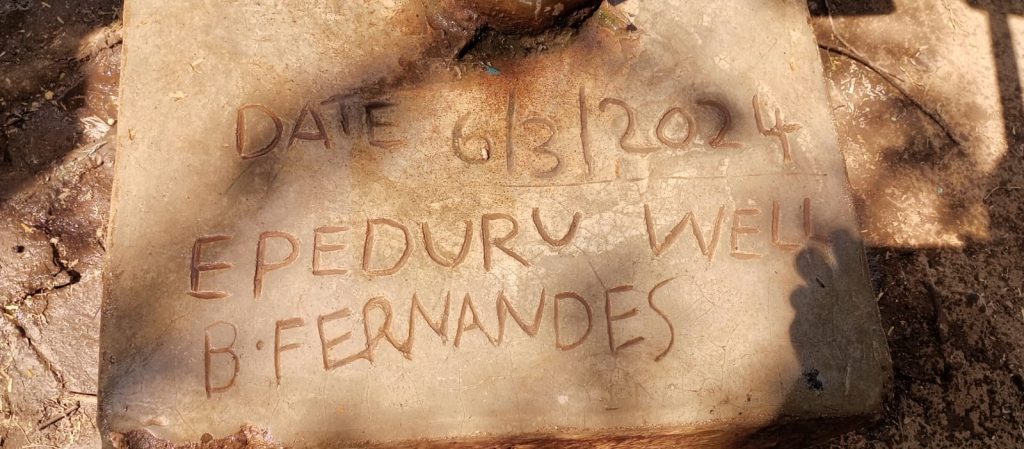
Nobody in the group was named Fernandez.
So Bobby did the math. Wrong coordinates, wrong name. This must be the wrong well.
Bobby has led many CRF trips, so he jumped into fix-it mode. He mapped a route to the pin and started planning to load everyone up. By my estimation, that drive was going to take four hours each way, starting at two in the afternoon, on back roads.
And I couldn’t reach him.
I checked with Philip Keter, our drilling director, who confirmed what I already knew in my gut: the well they were standing at was the right one. We had sent them to exactly the right place.
But my calls wouldn’t connect. My messages sat there undelivered. So I did the only thing I could do, which was stare at my phone and pray the group wasn’t already bouncing down a dirt road toward a pin in the middle of empty bush.
When I finally got signal, the first mystery solved itself in about a minute. The well’s coordinates had originally been recorded in degrees, minutes, and seconds. But somewhere along the way, they’d been read as a decimal location instead. If you use the same numbers in the wrong format, suddenly the pin jumps far across the map. If that sounds like an easy mistake to make, it is. Coordinate formats have humbled pilots, surveyors, and at least one relief organization I know personally.
That left the “B. Fernandez” of it all.
I pulled out my laptop and, as we bounced across the rough terrain, I checked our database — no B. Fernandes had ever given for a well. I was baffled and moderately motion sick.
But Philip had a theory, and a phone call to a partner who works in the community confirmed it. Bruno Fernandes is the captain of Manchester United. It turns out the kids in the community are big football fans — or I guess I should say “soccer fans” for the American audience.
While the concrete was still wet, they’d written their favorite player’s name right into their new well.
When we finally caught up with the group and explained all of this, they laughed. Fortunately, they hadn’t yet driven off into the sunset after a phantom pin. They’d stood at their well, walked around it, felt the water coming out of the pump. The whole time they were searching the map for their project, but it was right under their feet.
That’s the part I keep coming back to. Milton wrote once about his friend Luka in Barwessa, who said of the water beneath his village, “What I needed was always here. I just didn’t know it until you came.” Our friends got a small taste of that same truth from the other side: what they came looking for was already there. They just needed someone to tell them.
And honestly, I love that the kids wrote a soccer star’s name on that well. A plaque tells you who paid for something — and I love seeing the names of our donors and their honorees on projects where they request it.
But a name scratched into wet concrete by a ten-year-old tells you who the well belongs to. That well isn’t a monument sitting out in a field. It’s part of the neighborhood now, claimed by the same kids who drink from it, argue about soccer next to it, and will grow up never knowing what it was like before the water came.
So if you’ve given toward a well, or you’re thinking about it, here’s a tip we learned in Turkana: GPS coordinates are sneakier than they look. And if you get there and find someone else’s name on your well… it probably just means the kids love it as much as you do.
YOU CAN BRING LIFESAVING WATER TO A COMMUNITY IN NEED
V